Suspendisse interdum consectetur libero id. Fermentum leo vel orci porta non. Euismod viverra nibh cras pulvinar suspen.
Suspendisse interdum consectetur libero id. Fermentum leo vel orci porta non. Euismod viverra nibh cras pulvinar suspen.


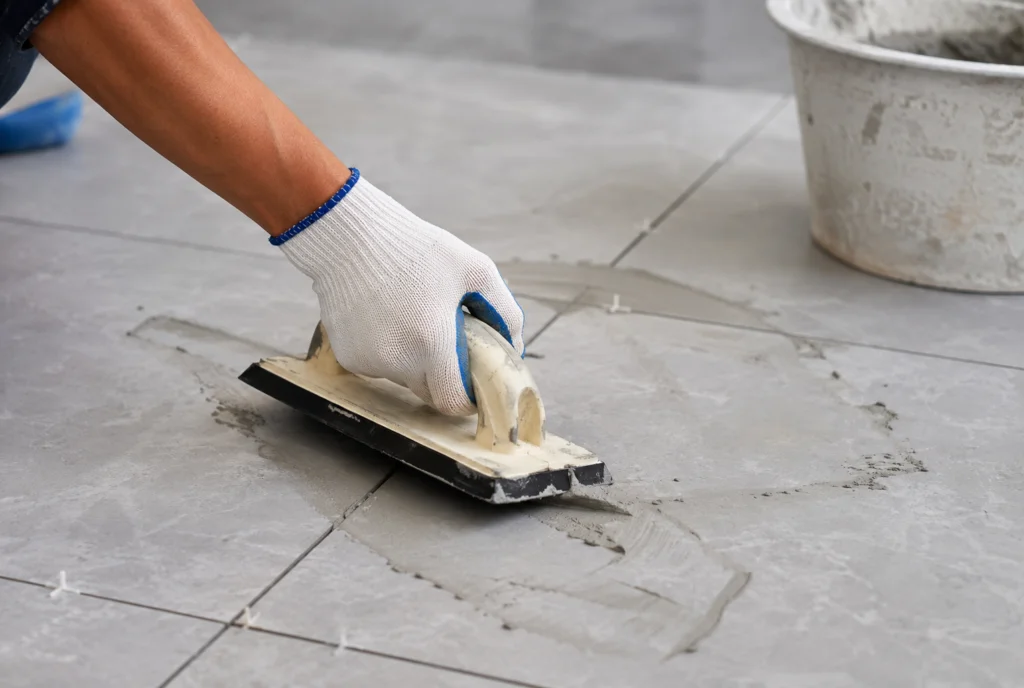
Grouting is a specialized construction and repair technique used to fill voids, cracks, gaps, cavities, joints, and spaces within or around concrete and structural elements. It plays an important role in improving structural stability, controlling water ingress, restoring damaged areas, supporting foundations, and enhancing the overall performance of civil structures. At Viera Enterprises, we provide professional Grouting Solutions for residential, commercial, industrial, infrastructure, institutional, hotel, healthcare, and other construction and rehabilitation projects.
Grouting requires proper technical understanding because the selection of grout material, injection pressure, flow characteristics, setting time, surface condition, and application method can significantly affect the final result. Our team evaluates the site condition and identifies the nature of the void, crack, leakage, settlement, or structural requirement before selecting a suitable grouting methodology.
Our engineering-driven approach combines experienced manpower, quality materials, suitable equipment, controlled application techniques, and professional supervision to provide reliable grouting solutions. We undertake grouting works for concrete structures, foundations, slabs, walls, construction joints, machinery bases, basements, water-retaining structures, and other areas requiring filling, sealing, stabilization, or structural improvement.
1. Pressure Grouting
Pressure grouting is used to inject grout into cracks, voids, cavities, joints, or other inaccessible areas under controlled pressure. This technique allows the grout to penetrate areas that cannot be effectively treated through conventional surface application. Our pressure grouting services are planned according to the size and location of the void, accessibility, water conditions, and structural requirements. Controlled injection helps fill internal spaces and can improve the overall integrity of the treated area.
2. PU Injection Grouting
Polyurethane injection grouting is commonly used for controlling active water leakage and sealing cracks or joints in concrete structures. When injected into suitable locations, PU grout can react and expand to fill voids and pathways through which water is entering. Our PU injection grouting solutions are suitable for basements, underground structures, water-retaining structures, tunnels, construction joints, and other areas experiencing water ingress. The injection points and material selection are planned according to the leakage condition and site requirements.
3. Epoxy Grouting
Epoxy grouting is used where high bonding strength, durability, and resistance to mechanical or chemical exposure are required. It can be suitable for machinery bases, structural connections, cracks, joints, and other applications where a strong and durable filling material is required. Our team prepares the affected surface appropriately before carrying out epoxy grouting to achieve effective bonding and reliable performance.
4. Cementitious Grouting
Cementitious grouting is a widely used method for filling larger voids, cavities, foundations, structural gaps, and other construction-related spaces. Depending on the application, specially selected cement-based grout mixtures can be used to provide filling and support. We provide cementitious grouting solutions for foundations, base plates, structural elements, and other civil construction applications where a compatible cement-based grout is required.
5. Structural Grouting
Structural grouting is used to fill gaps and voids around structural elements and improve contact between different components. It may be required below base plates, around structural supports, foundations, equipment bases, or other load-transfer areas. Our structural grouting services are carried out with careful attention to surface preparation, grout flow, filling, curing, and overall execution to achieve proper contact and support.
6. Foundation Grouting
Foundations may develop voids or require additional support due to settlement, soil-related conditions, construction limitations, or changes in structural requirements. Our foundation grouting solutions are designed to fill suitable voids and improve the contact or support conditions around foundation elements where applicable. The grouting method is selected according to the site condition and engineering requirements.
7. Crack Injection Grouting
Cracks in concrete structures can allow water and moisture to enter the structure and may contribute to further deterioration. Injection grouting can be used to treat selected cracks depending on their characteristics and the required objective. Our team assesses the crack location, width, depth, water condition, and surrounding concrete before selecting an appropriate injection grout. This helps ensure that the treatment is suited to the actual condition of the structure.
8. Leakage Control Grouting
Water leakage through concrete walls, slabs, joints, basements, tunnels, tanks, and underground structures can be difficult to control when the source is located inside the concrete or behind the surface. Injection grouting provides a method of reaching internal leakage pathways through strategically placed injection points. Our leakage control grouting services focus on locating water-entry paths and injecting suitable materials to reduce or control water penetration.
9. Construction Joint Grouting
Construction joints can become pathways for water penetration if they are damaged, improperly sealed, or affected by movement. Our construction joint grouting services are designed to treat suitable joint-related leakage and void conditions. We inspect the joint, identify leakage points, prepare injection locations, and use an appropriate grouting system according to the site condition.
10. Base Plate & Machine Foundation Grouting
Heavy machinery and industrial equipment require stable and properly supported foundations. Gaps below machine base plates or between equipment and concrete foundations can affect load transfer and equipment stability. Our base plate and machine foundation grouting services help fill appropriate gaps and provide a solid contact surface between the base plate and supporting concrete. The grout selection and application method are determined according to the equipment and project requirements.
11. Void Filling Grouting
Voids can develop below slabs, foundations, pavements, structures, and other areas due to settlement, erosion, shrinkage, construction conditions, or soil movement. Our void filling grouting solutions are designed to fill accessible and inaccessible cavities where appropriate. The objective is to improve support conditions, reduce empty spaces, and restore continuity in the treated area.
12. Waterproofing Grouting
Grouting can be an effective component of a waterproofing strategy where water enters through cracks, joints, construction gaps, or internal pathways. Our waterproofing grouting services combine appropriate injection techniques with suitable grout materials to control water penetration. This type of treatment can be particularly useful in basements, underground structures, water tanks, retaining structures, and other areas where conventional surface waterproofing may not address internal leakage pathways.
Site Inspection & Condition Assessment
Every grouting project begins with a detailed inspection of the affected area. We identify visible cracks, leakage points, voids, joints, cavities, settlement-related issues, and other relevant conditions. The surrounding concrete and accessibility of the affected area are also considered before planning the work.
Identification of Grouting Requirement
Different problems require different grouting materials and techniques. Our technical team evaluates whether the requirement is related to water leakage, structural filling, void filling, foundation support, crack treatment, equipment foundation, or another application.
Selection of Grout Material
The selection of grout is based on the application and site conditions. Factors such as water presence, crack characteristics, required strength, flowability, curing requirements, chemical exposure, and expected service conditions are considered when selecting the appropriate grout system.
Injection Point Planning
For injection-based grouting, suitable injection points are planned according to the location and direction of cracks, joints, voids, and leakage pathways. Proper positioning of injection points helps improve grout distribution and treatment effectiveness.
Controlled Grout Injection
Grout is injected using appropriate equipment and controlled procedures. Injection pressure and flow are managed according to the condition of the structure and the selected material. Our team monitors the injection process to achieve proper filling while avoiding unnecessary pressure on the surrounding structure.
Sealing & Finishing
After the grouting operation, injection points and treated surfaces are properly sealed and finished. The completed area is inspected to ensure appropriate treatment and finishing according to the project requirements.
Our grouting services can be used in a wide range of structures and facilities, including:
Residential Buildings
Commercial Buildings
Industrial Facilities
Factories
Warehouses
Basements
Foundations
RCC Structures
Water Tanks
Underground Structures
Parking Structures
Machine Foundations
Equipment Bases
Concrete Slabs
Retaining Structures
Construction Joints
Expansion Joints
Tunnels
Infrastructure Projects
Institutional Buildings
Hotels & Resorts
Hospitals
Educational Institutions
Water Leakage Through Concrete
Internal cracks, joints, and voids can create pathways for water penetration. Injection grouting can help seal suitable leakage pathways and control water ingress.
Voids & Cavities
Construction defects, settlement, erosion, or other conditions can result in voids beneath or within structures. Grouting can be used to fill suitable cavities and improve continuity.
Foundation Gaps
Gaps below foundations or structural components can affect contact and support conditions. Appropriate grouting can help fill these spaces where technically suitable.
Crack-Related Leakage
Concrete cracks can allow water to enter the structure. Injection grouting can be used for selected crack conditions to seal internal pathways and reduce water penetration.
Machine Base Gaps
Gaps between machinery base plates and concrete foundations can affect load transfer. Suitable precision grouting can help establish proper contact and support.
Construction Joint Leakage
Poorly sealed or deteriorated construction joints can become a source of water ingress. Grouting can be used as part of a suitable joint leakage treatment system.
Improved Structural Support
Appropriate grouting can help fill gaps and voids and improve contact between structural or construction components where required.
Water Leakage Control
Injection grouting can reach internal water pathways that may not be accessible through conventional surface treatment.
Void Filling
Grouting provides a practical method for filling selected cavities and inaccessible spaces within or below structures.
Enhanced Durability
Properly treated cracks, voids, and joints can help reduce further deterioration caused by moisture and environmental exposure.
Precision Application
Injection grouting allows targeted treatment of specific cracks, joints, voids, and leakage points with controlled application.
Reduced Structural Disruption
In suitable applications, grouting can treat localized problems without requiring extensive demolition or reconstruction.
Engineering-Driven Approach
We understand that successful grouting requires more than simply injecting material into a crack or void. Our team evaluates the cause, location, condition, and requirements of the affected area before selecting an appropriate solution.
Experienced Professionals
Our team has practical experience in waterproofing, structural repair, rehabilitation, and grouting-related works. This experience helps us handle different site conditions and application requirements.
Suitable Grouting Systems
We select grout materials according to the specific application, whether the requirement involves water leakage control, structural filling, void filling, foundation support, or equipment base grouting.
Controlled Execution
Grouting requires proper control of injection pressure, flow, material preparation, and application sequence. Our team follows systematic procedures to achieve effective filling and treatment.
Quality-Focused Workmanship
We pay attention to surface preparation, injection points, material handling, sealing, and finishing to maintain quality throughout the project.
Customized Solutions
Every crack, void, leakage path, and structural condition is different. We provide solutions based on the actual site condition rather than applying a single method to every project.
At Viera Enterprises, we provide professional grouting solutions designed to address a wide range of structural, waterproofing, and construction-related requirements. From PU injection grouting and epoxy grouting to cementitious grouting, pressure grouting, foundation grouting, crack injection, void filling, machine foundation grouting, and leakage control, our team provides practical solutions based on the condition of the structure.
Our approach combines technical understanding, quality materials, appropriate equipment, controlled execution, and professional supervision. We focus on identifying the actual source of the problem and selecting a grouting methodology that is suitable for the specific application.
Whether the requirement involves controlling water leakage, filling internal voids, improving contact below a base plate, treating selected cracks, supporting foundations, or rehabilitating concrete structures, Viera Enterprises provides engineering-focused grouting solutions with an emphasis on quality, durability, and reliable execution.